Security cameras are only as good as the alerts they send. If your phone buzzes every six minutes for swaying shrubs and passing headlights, you will start ignoring real events. Tuning motion detection for homes is both art and science, and the right settings depend on your layout, light conditions, and camera model. I work with homeowners from Fremont to Fairview, and the pattern is consistent: small adjustments in zones, sensitivity, and smart filters cut false notifications by 70 to 90 percent without missing meaningful activity.
Why motion alerts go wrong
Most home cameras watch dynamic environments. Trees sway, clouds change brightness, cats roam, and car lights sweep across walls. Traditional pixel-change detection treats any shift in the image as motion. Then, each manufacturer layers on smarter logic such as human detection, object size filters, and scene analysis. The trouble starts when these layers are misaligned with your scene. A camera pointing through a wrought-iron gate will “see” movement every time sun and shadow slide over those bars. A driveway camera fixed low to the ground will catch every neighborhood cat but crop out tall strangers at the edge of the frame.
False alerts have costs. You miss critical events because of notification fatigue, your storage fills with junk clips, and battery-powered units lose days of runtime. Getting this right is not about toggling one magic setting. It is about stacking several small changes until they add up to reliable detection.
Set a goal for each camera
Before you touch sliders, define what each device should do. A front porch camera should catch package theft and visitors, not cars across the street. A backyard camera should catch a person entering through the side gate, not wind-driven branches. If you own a video doorbell, it should prioritize faces and door interactions over passing joggers. This goal becomes your constraint when you choose zones, sensitivity, and alerts.
I ask clients to choose one primary outcome and one acceptable miss. For example: “Catch every person approaching the front door, accept occasional misses of distant sidewalk traffic.” With that clarity, you can ignore certain false alerts and lean the settings toward the outcome that matters.
Placement and angle come before software
The fastest way to reduce false alerts is a small physical adjustment. Software cannot fix a camera pointed straight at a busy street, or one that faces east toward morning glare. Re-aiming the camera by ten degrees can eliminate an entire class of triggers.
Think about where motion originates and where you want to detect it. Mount doorbells at 48 to 52 inches high, slightly to the side of the doorbell button if possible. For a driveway, set the camera at a higher angle, roughly 9 to 12 feet, looking downward. This angle reduces headlight streaks and lets person detection see full bodies, not just legs. Avoid pointing across a property line at moving cars. Instead, place the frame so cars appear only when they enter your driveway apron. For yards, shift the field of view to exclude the top third of sky. Changing composition yields better algorithm performance, especially for brands that rely on edge AI to identify people.
In Fremont and similar Bay Area suburbs, winds pick up in the afternoon and again after sunset as the temperature drops. If a camera stares at a tree canopy, you will see constant motion during those periods. Trim the branches that enter the frame, or reposition so major foliage sits outside detection zones. Hardware cannot ignore physics.
Sensitivity and motion thresholds, explained
Manufacturers label this differently: sensitivity, motion threshold, or detection level. Higher sensitivity means smaller changes trigger alerts. Lower sensitivity means only larger, more sustained changes count. The right value depends on distance, focal length, and scene complexity.
Practical method: start at medium sensitivity. Stand at the edge of the area where you want detection to begin and walk toward the camera. If the alert triggers too late, raise sensitivity a notch. If it triggers while you are far outside the target area, lower it. Then repeat at night, since many cameras increase exposure in low light, which makes small brightness shifts look like motion.

Another variable is object size. Some systems let you require a minimum percentage of the frame to change. If your camera faces an alley 40 feet away, a person might occupy 2 to 3 percent of the frame at first appearance. Set the object size minimum just below that threshold. This helps ignore small animals and wind-blown trash while still catching people.
Motion zones and privacy masks
Zones do most of the heavy lifting. They constrain detection to the parts of the image that matter. Draw them tightly around the approach paths and leave out the rest. A common mistake is to create one giant zone across the entire frame. You might as well leave motion detection on full.
Shape the zone so it starts where you want detection to begin. For a porch, include the steps and threshold, not the sidewalk. For a driveway, include the apron and the area in front of the garage door, not the street edge. Many apps allow multiple zones per camera. Use one small zone for the high-priority area and a second, larger zone for secondary coverage at lower sensitivity or limited alert types.
Privacy masks are equally useful. They do not just protect neighbors; they also eliminate noise sources. Mask out the top of the frame where sky flicker happens, or the side where your neighbor’s yard sees frequent movement. Some systems still analyze masked regions for exposure and white balance, but they will not generate motion events from them. That alone can remove dozens of daytime false triggers.
Smart detection: people, vehicles, packages, and pets
Object classification turns a jumble of motion into meaningful categories. The best cameras for home security now offer person and vehicle detection, and many add package and pet categories. The reliability varies between vendors and models, and it often degrades at night or at long distances.
For front doors, enable person and package detection and disable general motion alerts. Package detection can be finicky at night when IR glare washes out edges. Balance expectations: a missed package notification is not a missed recording. The clip still exists, and person detection usually catches the drop-off.
For driveways, vehicle detection shines if your camera has a clean view of the apron. If the street is unavoidable, combine a zone that excludes the far lane with vehicle detection, then set alerts to “only when in zone.” If your system allows “person or vehicle,” choose that instead of “any motion.” It reduces the number of clips by half or more.
For backyards, pet detection helps the most on battery cameras with tight recording budgets. I often set “person only” at night and “person or pet” during daylight when shadows are less aggressive. On systems with smart home integration with CCTV recorders, consider dual rules: record all motion for evidence, but notify only for people. You keep the forensic trail without drowning in alerts.
Day and night profiles
Your scene changes after sunset. Sensors switch to monochrome, IR LEDs turn on, and exposure times stretch. Headlights look like explosions, insects become bright meteors, and spiderwebs glow like tripwire. A single set of motion parameters rarely works across both conditions.
Use schedules if your camera supports them. Create a daytime profile with higher sensitivity, broader zones, and more categories enabled. Create a night profile with lower sensitivity, tightened zones, and person-focused alerts. If your system cannot schedule, you can still adjust IR strength. Many cameras offer low, medium, high, or off. Drop IR to low if you see washout on near surfaces like white siding. That reduces bloom that can trigger motion. In some architectures, using an external IR illuminator set off-axis keeps bugs away from the lens and cuts false nighttime alerts by a surprising amount.
Taming headlights, sun flicker, and moving shadows
Headlights and sun flicker cause more false alerts than people expect. You can mitigate them with simple adjustments.
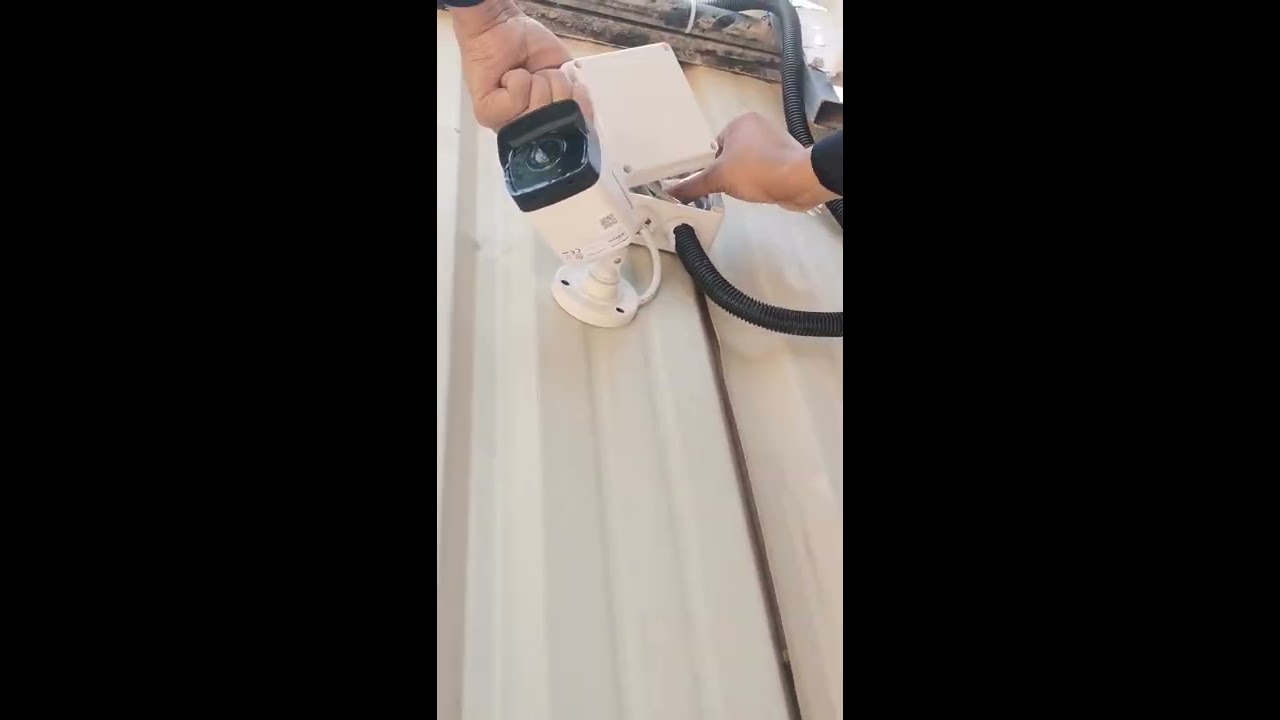
Angle the camera slightly downward to limit how much of the street or sky it captures. Reduce exposure compensation if available, and switch from dynamic to fixed exposure regions when your camera supports it. Install a small sun shield on outdoor cameras to reduce lens flare during late afternoon. If you face east or west, try a circular polarizing filter designed for your camera model. It helps with reflections through windows and cuts glare on bright days. That small accessory often pays for itself in fewer false clips.
For sidewalk-facing doorbells, choose the narrowest field of view that still covers the approach. Many video doorbells offer two modes: full and head-to-toe. If a busy street sits just 10 feet beyond your porch, head-to-toe might capture too much car movement. Switch to the narrower mode that trims horizontal extent.
Recording mode and clip length
Short clips limit storage but can widen the gap between clips when motion is intermittent. If your camera uses a cool-down period, set it as short as the battery can tolerate. On wired systems, remove cool-down entirely and let the system stitch events using “extend recording when motion continues” rules. Set minimum clip length to 10 to 15 seconds. Anything shorter tends to clip off the context where you figure out what happened.
Pre-roll matters. Cameras that buffer 3 to 5 seconds before motion starts capture faces earlier and reduce the need for hypersensitive triggering. On battery devices, pre-roll can consume more power, so weigh it against the convenience of fewer missed starts.
Notifications: less noise, more signal
You do not need to see every motion event as a push alert. Decide what actually deserves an interruption. For front doors, I select “person detected” and “package detected,” all other motions record silently. For driveways, I set “person or vehicle within zone A,” record all motion anyway. For backyards, I disable alerts during daylight hours when family and pets are active, then enable person-only alerts overnight.
If you use family safety technology like shared notifications, be selective. One phone should receive all critical alerts so someone always sees them, but secondary phones can receive summaries or only person events. Some platforms support rich notifications with a thumbnail. Enable that. A two-second glance at the thumbnail saves you from opening the app. If thumbnails are dark at night, try turning on color night vision or adding a small, always-on coach light near the scene to lift exposure. A 300-lumen warm LED often makes night thumbnails usable without attracting insects or bothering neighbors.
Integrating cameras with broader smart home systems
Smart home integration with CCTV recorders, door locks, and lights can shrink false alerts further. Link your porch light to the doorbell’s person detection. Light raises exposure, which improves person classification, leading to better alerts. Tie your driveway camera to a geofence. When your phone is home, lower notification priority or silence vehicle alerts to avoid constant pings when you pull in and out.
For DIY home surveillance with an NVR or a software platform, use server-side analytics as a second filter. Let cameras trigger on motion, but notify only when the server confirms “person in zone.” This two-step process filters out a lot of noise. If you self-host, be mindful of CPU load from multiple streams at high resolution. Offload secondary streams at 640p for analysis and keep 4K for recording. The analytics do not need full resolution to make good decisions, and your hardware will run cooler.
Battery cameras vs wired systems
Battery-powered cameras conserve energy by sleeping and waking on motion. They favor broader sensitivity and shorter clip lengths. That means more potential false triggers and a higher chance of missing the first second of a person entering the frame. Wired systems can watch constantly, analyze more frames, and trigger more precisely.
If you rely on battery units, keep zones small, use person-only alerts, and add a passive infrared (PIR) trigger if your model offers it. PIR sees heat motion, which ignores shadows and headlight flicker. Combined with visual motion, it raises confidence. Also, place battery cameras away from busy scenes. An inexpensive wired camera covering the street edge can complement a battery unit guarding the porch. This hybrid approach often costs less than replacing every camera while improving reliability.
For homeowners seeking affordable home camera systems, mix two or three higher-end smart cameras in critical spots with simpler fixed models on low-risk perimeters. Spend money where human detection matters most: front door, driveway entry, side gate. Save on places where a generic motion record is enough.
Night vision trade-offs and tuning
A night vision camera guide always returns to two variables: light and distance. Infrared has limits. Faces at 30 feet may look like gray ovals. Person detection quality drops as soon as facial and body edges blur. If you want better classification after dark, add low, even white light rather than cranking the IR. Even 5 to 10 lux transforms the image. Mount fixtures so light falls from the side, not straight into the lens. If you already have motion-activated floodlights, set a short delay and link camera pre-roll to capture the moment when the lights pop on.
Spiders love warm camera housings and IR LEDs. A web across the lens will generate motion all night. Spray a light ring of peppermint oil around the mount once a month, avoid the lens itself, or use a small silicone shield that offsets the IR LEDs from the glass. Clean lenses quarterly. Dust and water spots scatter IR and look like confetti to motion algorithms.
Real examples from homes like yours
A Fremont homeowner with a busy corner lot called about 150 alerts per day from a front yard camera. The frame included a two-lane street, a tall maple, and a glass storm door reflecting traffic. We solved it by lowering the camera from 10 feet to 8 feet, angling it downward 12 degrees, adding a trapezoid zone that began at the inner edge of the sidewalk, and setting sensitivity to medium-low with person-only alerts. We masked the upper third of the frame. Alerts dropped to 10 to 15 per day, all person-related, while the system still recorded general motion for review.
Another case: a video doorbell versus CCTV discussion for a small bungalow. The owner wanted package and visitor alerts but had iron railings that created high-contrast shadow flicker. The video doorbell’s onboard person detection outperformed the old DVR. We left the DVR to cover the driveway and side yard, then set the doorbell to head-to-toe view, person and package only, and enabled a small porch light from dusk to 11 p.m. The doorbell produced crisp thumbnails, and missed packages went to near zero.
A third client with a backyard pool had constant false alarms from ripples reflecting on the white stucco wall. We created a curved zone that excluded the water surface, disabled general motion alerts, and enabled person-only alerts after 9 p.m. A 3-watt side light reduced IR reflection, and we set minimum object size to 2 percent. The camera returned to sanity without missing late-night intruders.

Balancing privacy with performance
Cameras close to sidewalks can invite privacy concerns. Set privacy masks for windows and neighboring yards. Use shorter clip retention for zones near public right-of-way. If you are in a city with local ordinances, Fremont included, aim cameras inward and avoid recording audio in public spaces where it could violate wiretap laws. Many systems offer “no audio” toggles per camera. Reducing audio also saves a bit of storage and avoids capturing private conversations you do not need.
Storage and retention strategies
False alerts clog your archive. Once you https://andersonyaeb893.lowescouponn.com/crystal-clear-cctv-fixing-day-night-mode-ir-reflection-and-dirty-lenses tune detection, revisit retention. Keep 14 to 30 days on critical cameras, 7 to 14 days on secondary ones. If you are compressing heavily, verify that motion detection still performs well. Over-compressed streams smear details and reduce classifier accuracy. Where possible, use variable bitrate with a quality floor rather than a hard cap. If you back up to the cloud, tag critical events. Some services let you mark clips as protected to avoid deletion when storage fills.
Choosing the right camera features for your home
For homeowners evaluating the best cameras for home security, prioritize these features:
- Reliable person detection at both day and night, with adjustable zones and object size filters. Dual-band Wi-Fi or PoE for stable connectivity, plus pre-roll buffering for more complete clips. Color night vision or good low-light performance without excessive noise. Flexible notification options, including rich thumbnails and per-category toggles. Local storage options alongside cloud, so you retain evidence even if connectivity fails.
If you are comparing video doorbells vs CCTV, remember that doorbells excel at close, face-level detection with fast notifications and package awareness. CCTV with a network video recorder excels at broad coverage, constant recording, and better forensic review. Many homes benefit from both. The doorbell handles interactions at the threshold, while the CCTV cameras watch the perimeter and driveway.
A minimalist checklist to cut false alerts quickly
- Re-aim the camera to exclude streets, sky, and large foliage, then draw tight motion zones. Set medium sensitivity by day, lower at night, and enable person-only alerts for high-traffic scenes. Use privacy masks to block out moving trees, windows, and reflective surfaces. Add steady, low-level lighting at night to improve classification and thumbnails. Clean the lens and trim vegetation every season; maintain the scene, not just the settings.
Preventing burglary without drowning in pings
Motion alerts are a means to an end: home burglary prevention and peace of mind. A well-tuned system catches the approach, shows a clear face, and notifies the right person at the right time. Blend cameras with a few supportive measures. A visible doorbell camera deters package thieves. A driveway camera linked to a smart floodlight deters prowlers. Smart locks remove the need to hide keys, and a simple rule in your automation platform can turn on indoor lights when a person is detected outside after midnight. These touches signal occupancy and reduce risks without demanding your attention every hour.
For families, extend the system as family safety technology, not just surveillance. Set shared notifications for “person at front door” to both partners during work hours, then route to whoever is home after 6 p.m. Older kids can receive summaries without full stream access. Place a privacy-respecting indoor camera covering entryways only, with motion alerts off and person detection on during daytime, then schedule it to arm when everyone leaves.
When DIY is enough, and when to call a pro
DIY home surveillance works well in most single-family homes and townhouses. If you can run a few cables or place strong Wi-Fi extenders, you can achieve dependable coverage. Complex properties, deep lots, and mixed-light environments sometimes justify professional help. If your home faces strong sun in the afternoon, or you have significant tree cover and reflective surfaces, a professional can choose lenses, filters, and mounting angles that software cannot fix alone.
In Fremont and nearby cities, I often see microclimates at play. Foggy mornings, bright midday sun, and breezy afternoons put stress on detection. The best results come from combining modest physical changes with sensible software tuning. Start with the basics, measure outcome, and iterate. Video you can trust, alerts you actually read, and storage that holds meaningful clips are entirely achievable without overspending.
The bottom line on motion detection for homes
Clear goals, smart placement, and layered settings make motion detection dependable. Treat zones as your scalpel. Set sensitivity with day and night in mind. Use person and vehicle filters to focus on what matters. Add a bit of lighting to boost accuracy after dark. Integrate with your smart home carefully, and keep notifications tight so you do not tune them out. Whether you are building an affordable home camera system from scratch or upgrading with newer models, the discipline is the same: simplify the scene, constrain the logic, and let the cameras work for you rather than against you.